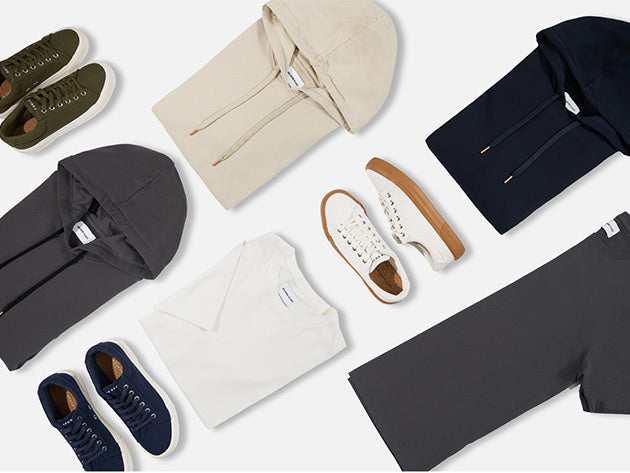




A fresh pair can make the whole fit, but only if you can actually wear it past the mirror selfie. This sneaker sizing guide online breaks down how to find your right size before checkout, whether you are styling clean low-tops with Essentials X-Her, adding runners to your activewear rotation, or pulling up in a statement pair for a Club-Ready Vibe.
Start With Your Real Foot Measurement
Your usual sneaker size is a useful starting point, not a guarantee. Sizes shift between brands, silhouettes, materials, and even colorways. The number on an old pair you have worn into the ground may not translate to the new pair in your cart.
Measure both feet at the end of the day, when they are likely at their largest. Put on the socks you expect to wear with the sneakers, stand on a sheet of paper with your heel against a wall, and mark the tip of your longest toe. Measure from the wall edge to that mark in inches or centimeters. Repeat on the other foot.
Use the longer measurement when you compare a brand's size chart. Plenty of people have one foot that runs slightly longer or wider. Buying for the smaller foot can leave the bigger one cramped, and cramped sneakers do not become a flex after a week of wear.
Leave Room at the Toe
A good everyday sneaker should have about a thumb's width of space between your longest toe and the front of the shoe. That space matters when you walk, take stairs, stand at a show, or spend a full day on campus. Your feet naturally move forward during motion.
Too much room is not the answer, though. If your heel lifts with every step or your foot slides around on turns, the shoe is too large or too wide for you. A secure fit should feel held, not squeezed.
How Sneaker Styles Change the Fit
Not every sneaker is built for the same job. A chunky lifestyle pair, a retro court sneaker, and a knit running shoe can fit completely differently even when they carry the same size label. Always read the fit notes attached to the specific style instead of assuming every sneaker follows one formula.
Lifestyle and Streetwear Sneakers
Low-profile court shoes and retro streetwear silhouettes often have firmer uppers and a more structured toe box. They can feel tight across the forefoot at first, especially in leather or synthetic materials. If you have wider feet, moving up half a size may make sense, but only if the brand notes say the pair runs narrow.
Do not automatically size up just because a shoe looks narrow online. Going too long can create heel slip and creasing in the toe box. A wider fit option, if available, is usually better than adding extra length.
Running-Inspired and Active Sneakers
Mesh, knit, and lightweight performance-inspired sneakers usually feel more flexible right out of the box. They may hug the foot more closely without causing pressure, which is great for a Freely Activewear look that stays comfortable on the move.
For walking, workouts, or long city days, prioritize toe room and heel security over a super-snug first impression. Your foot expands with activity. A sneaker that feels perfect while sitting can feel way too tight after an hour on your feet.
High-Tops and Padded Collars
High-tops bring extra ankle coverage and major outfit energy, but the collar can change how the shoe feels when you step in. Loosen the laces all the way before trying them on. Forcing your foot into a tightly laced high-top can make a correctly sized shoe feel smaller than it is.
Once your heel is seated, lace the shoe as you would actually wear it. Check for pressure on the top of the foot and around the ankle bone. A padded collar should feel supportive, not like it is digging in every time you bend your knee.
Read Online Size Charts Like a Pro
Size charts are useful when you treat them as measurements, not just a row of US numbers. Find the chart for the category you are shopping, then match your longer foot measurement to the recommended size. If you land between sizes, the choice comes down to the sneaker's shape, your foot width, and how you plan to wear it.
Go up half a size when the style runs small, the toe box is narrow, you have wider feet, or you plan to wear thicker socks. Stay with the smaller option when the sneaker runs large, has a roomy toe box, or uses a soft upper that will relax slightly with wear.
One detail that trips up online shoppers: men's and women's US sizes are not interchangeable. A women's US size is typically about 1.5 sizes higher than the equivalent men's US size. Unisex sneakers may list both, so make sure you are reading the correct column before you add to cart.
Check Fit Notes and Reviews for the Details a Chart Misses
The best product feedback does not just say “love these” or “too small.” Look for reviewers who mention their usual size, foot width, and whether they chose their true size, a half size up, or a half size down. A review from someone with a similar foot shape can be more helpful than dozens of vague ratings.
Pay attention to repeated patterns. If multiple buyers say the heel is loose, the shoe may suit a narrow heel better with a tighter lacing method. If reviewers consistently mention a narrow midfoot, a half size up may help some shoppers, while others may need a different silhouette altogether.
Photos can help too, especially when reviewers show the shoe styled with the socks they wear. A thick crew sock and a thin no-show sock can create a noticeably different fit in a structured sneaker.
Do Not Count on Every Sneaker to Stretch
Leather can soften. Knit can relax. Foam can compress. But “break-in” should mean the upper becomes more comfortable around your foot, not that your toes survive weeks of pressure until the shoe finally gives up.
If your toes hit the front, your nails feel pressure, or your forefoot goes numb, the sneaker is too small. If the shoe pinches across the widest part of your foot, it may be too narrow rather than too short. Stretching can slightly improve width in some materials, but it rarely creates meaningful extra length.
A pair that feels mildly firm through the upper may settle in. A pair that hurts from the first try-on is giving you the answer already.
Try Them On the Smart Way
When your sneakers arrive, try them indoors on a clean surface before wearing them outside. Use the socks you planned for, lace both shoes, and spend a few minutes walking on different surfaces in your home. Stand still, walk quickly, take a few stairs, and bend your knees as if you are about to head out.
Check these five things before you remove the tags:
- Your longest toe has space without touching the front.
- Your heel stays planted instead of lifting with each step.
- The sides do not pinch at the ball of your foot.
- The tongue and collar do not create painful pressure points.
- Both feet feel equally supported, even if one is slightly larger.
Small Fit Fixes That Actually Work
Before deciding a pair is wrong, test the lacing. A runner's loop can reduce heel slip, while skipping an eyelet over a pressure point can give the top of your foot more breathing room. These are useful fixes for small comfort issues, not magic tricks for a full-size mismatch.
Thin insoles can take up a little volume in sneakers that feel just slightly too roomy. Thicker socks can also help with a marginally loose fit, but only if they match how you will really wear the pair. Buying a shoe that only works with one specific sock is not always practical for an everyday rotation.
For sneaker fits that look current and feel easy from first step to last, choose the size that gives your feet room to move while keeping your heel locked in. The right pair should support the plan, whether that is a coffee run, a late-night link-up, or a full day outside.
0 comments